It's autumn now, temperatures like our October, only somewhat warmer. People wear coats--some down, many quilted, even leather. It doesn't feel that cold to me and besides, I didn't bring a coat so I'm saving my almost-a-sweatshirt for winter. But while the air doesn't seem as cold as what the garments people on the street would suggest, I'm ready to retire my sandals and shorts.
But I couldn't last week. I've been interviewing potential new Spanish teachers and walking great distances to do so for the exercise. On Monday it took me almost 60 minutes to get to, and 45 minutes to return from a teacher in Congresso. I would have liked her just fine except that she kept glancing at her computer screen for emails and twice answered a text while we were talking. Since I was paying her for the privilege of this interview/lesson I was more than a little annoyed. But I did get to see another non-touristy part of town...lots of butcher shops and rolls-of-fabric stores.
During both ends of the walking I was moving very quickly because I did not know where I was going (and overshot the place getting there hence the extra minutes). But walking fast is not unusual for me and I was wearing my puma sneaker like things, which do not stand out as would my usual sneakers. Anyway, I woke up the next morning unable to put any pressure on my right foot. This happened to me once before, last year, when I walked several hours in my flip flops. I had to hop down the stairs (my space is a very small loft) and wait until Candida brought me breakfast and then pantomimed what was wrong with my foot/ankle. I kept saying that my 'foot was sick' in Spanish but she seemed to get the point because then Carlos came up to ask if I needed something that I could not understand but he pantomimed a bandage and I said 'elastico' and off he went. I was afraid he'd come back with gauze but I think between the three of us he bought the right thing. I wrapped my foot and ankle so that I could at least locomote without cringing and texted Berta to ask if I could hold class on the 0 floor next to the kitchen so that I wouldn't have to hop up the stairs two more flights. I took a cab, hopped in, and held a class in the noisiest part of the building. It was a very sad class. Only two of my regular students were there, and two others--a man in his 40s with very long and wavy hair, wearing a soccer shirt, and a young boy about twelve. The two newcomers knew a bit of English, longhair from having attended four previous sessions with other volunteers and young boy because he was studying it in school. This made it very difficult for Gloria who is really struggling with the simplest of things but is very motivated to learn. And she and Johan and I were missing Natalie because with the two of us, one could work directly with the student(s) not getting it, while the other could move things ahead.
By Thursday I was able to put pressure on my foot for short periods of time but I still wore the compression bandage, meaning I needed to wear my sandals and that's when I really looked out of place, with everyone bundled in jackets. Not that my toes didn't get cold when the sun went down, but it was in the 50s for criminy's sake. That class went much better. We were back up on the third floor (meaning 4th) and I had my five most faithful students with me. I tried another tactic. Fredd gave me a day-by-day calendar with sayings in Spanish and English, and I brought in a handful and we went through them to see if the translations made sense. It really entertained everyone when they were senseless. And I corrected homework--some of it seemed to be from about three or four weeks ago, but who cares. But for most of the time we watched music videos with lyrics. All Beatles, all the time. First I'd play the song with Spanish subtitles. I know this is against all rules of second language acquisition, but I was teaching to the needs of the class. Second I played the videos with English subtitles. Then finally with none. Then we talked about them. Lila said she always thought she hated music in English but she realized that it was because she didn't understand what was being said. Marcos put his ear up against the tinny speaker because he wanted to hear the pronunciation (eech, British!) Gloria kept speaking about her love of John Lennon, Johan focused very closely on the English words to Imagine...and everyone sang All Together Now in English through all three takes. We could have kept going--we actually got kicked out of the space because it was needed by others. Before we ended, I asked them to write me the words to the title of Spanish songs they liked so I could find them with English subtitles. I must have said the wrong thing because I got lyrics instead of titles. And none of the ones that I could suss out had English subtitles. Instead, I found that Bon Jovi had recorded many of their hits in Spanish...I found live and studio versions...so I may use them instead. Anyway, I don't care if I'm violating standards of teaching ESL. I know that I could not keep a class coming back if I only spoke English. So while my Spanish is laden with mistakes, if I need to explain something, like 'I, Me, Mine' in Spanish (Berta said "You know this sentence doesn't make sense in Spanish) then I'm going to go right ahead and do it.
I've become aware of how much I'm flaunting the rules because I've been looking into getting a certificate in TESL. I'm interviewing for the possibility of doing so this week, so I should have more to say on this subject next time.
Now, as to what I really want to write today--it has to do with Natalie's last day, but after the time of the pictures I posted last week. After she left my apartment (after cutting off the party-part of my mullet), I checked my email and found that I could meet another potential teacher in Palermo. I tried calling Natalie so she could wait for me at the subte. No answer. I figured I would just go by myself. While I was standing amidst a huge crowd on the platform she texted me back and said she was on the train but would wait for me at Plaza de Mayo. By the time my train came, the platform was so thick with people I was sure someone would get pushed on to the tracks. Instead we surged into the train without an inch to move one direction or another. Plaza de Mayo was two stops ahead and I realized it was a stupid place for us to meet because we'd have to get back on the train to the combinacion stop of Diagonal Norte / Av 9 Julio. Nevertheless we found each other amidst total chaos. The doors kept opening and closing (good thing too because first I jumped off, then I thought she said she was on the train, jumped back on, saw her outside my car, jumped back out). The reason this was happening was that there were marchers with flags and poles keeping the doors open. Remember we had to have the going away party early because Los Pibes was going to march? Well it was that march that these people were going to and they were making the trains even more crowded than usual because of the banners and such. We never figured out why they were messing with the doors...but we decided to go above ground to catch a bus or cab since it was overly crowded down below and there is something about being in a tunnel or train in a crowd that creates a sense of never being able to move again. We went above ground where things were even more chaotic. People with banners and poles. Families and children sitting on the curb eating sandwiches. Traffic nearly at a standstill. We walked toward where we might catch one of several buses to Palermo Soho, but they didn't seem to be moving either and even had they been, they were as crowded as the trains. And of course just finding one isn't enough--you have to be at the exact stop or the bus won't stop. Or if it is stopped, it won't open the doors. So we wended across Av 9 Julio, made easier because most of the traffic was at a standstill because of the marchers. We kept heading toward where we might be able to find a bus. The march was not very organized--small pockets of this group or that, but no long sustained this side or that side. Perhaps that came later. These marches are frequent and disruptive, and on this day, frenetic. I could not tell what was being protested...everyone had argentine blue and white. We found the right street and headed down it after ascertaining where the stop was from a shopkeeper who was looking out at the gridlock with amusement. It's like the leader never showed up but the little groups were going to march anyway, in whatever direction they happened to be headed.
As we passed back over the corner we'd just come from, I saw something that has haunted me all week. A woman, a carbonera (sp?), was sitting on the corner going through garbage bags looking for her cardboard, glass, and plastic. Right next to her were two boxes, which I assumed were for her collection. Then out of one of the boxes popped an adorable dark haired, dark eyed, dirt smeared boy of about three, laughing and laughing because he was certain that he'd scared me. He ducked back down again and repeated his game with the next person walking by. So I peeked into the other box where a much younger child, equally dirty but swathed in blankets, lay sleeping. This is where mama kept the kids while she worked. Perhaps someone with a cart would come by later to pick them up. I don't know. But it would be nearly impossible to carry the two boxes of living children and a bag of 'gold'--the garbage that could be traded for pesos alone.
I started thinking about the conversation I'd had with A. weeks earlier about how presumptuous it was of me to think that the cartoneros were not happy. How I was imposing my own (capitalist) standards of happiness upon others. Now, that's easy for him to say too since he's also obviously lived a life of 'have' instead of 'have-not'. But, this little boy seemed happier than many petulant kids I know who have to have the latest greatest thing they just saw on television. And this mother was able to carry her kids to work. On the other hand, I thought about arguments I'd heard justifying slavery in our own country--hear them singing in the fields and all that.
I'm definitely troubled by the caboneros. I have difficulty thinking about them riding a special train with no windows, coming from the outlying villas into town so that they can do the work of picking through garbage. Marginalized but sanctioned, I guess? Happy? Those kids I saw weeks ago in the cardboard little enclave were just being kids---can my buddy come out to play--? This is the life they know. What's wrong with being happy with it?
But then I think about justifications made in history about other groups, marginalized, enslaved, banished. Look at the children, they look happy. Listen to the people, they're singing in harmony. What's different? I agree that I should not impose my idea of happiness upon others, but it makes it difficult to know when to stop and help. Was Gloria any less happy because she had not been to a restaurant until Natalie's going away party? Definitely not. What about the family I saw this morning as I crossed Av 9 de Julio, encamped on one of the wide islands in between the two sets of four lanes. They had a huge cardboard box, bottom up, a ratty mattress, socks laid out on the grass. Two kids were playing with sticks, maybe light sabers, maybe swords, maybe just sticks, as the man and woman examined items from huge plastic bags. I read that the cabaneros are territorial and perhaps it is sometimes necessary to take in a promising haul without sorting through it first. I don't know. The thing the man was inspecting looked like a metal piece from the inside of a vehicle. The woman was focused on separating her glass bottles from plastic. But the kids--playing with nothing but their imagination and props...they were squealing and falling down laughing just like I remember doing when playing make believe.
Maybe it is the seeming lack of possibility that bothers me. But is that because of my misguided belief in a world where anything is possible? It's my teaching guide, but I don't want set up a world of wanting in people happy with what already is. It's not the mark I want to leave--longing for something that may never be in reach.
This week has already begun so I'll stop for now. I'm walking a new working people neighborhood so I'll write about that next time.
Chau.
Monday, April 26, 2010


Sunday, April 18, 2010
Catching up on fotos.
Neighborhood Graffiti
I know that this will end up being a disjointed post, but I want to put up various photos about things that I've already written about, and then add some more.
So here goes: the graffiti or wall art (you judge) is often spectacular. Or, more often, sends a message. The really amazing pictures appear over night, and are always signed. The ones that look as if they could have come from anime stills did just crop up and blasted out at me one morning when I happened to have a camera. Who knows how long they will stay...when the next artist comes along they'll just become an underlayer.
 |
| grafitti in my neighbordhood |
Subte A
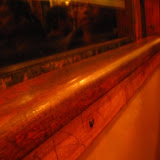
I wrote about taking this line last month. It is the oldest one in the system and more stunning than I could capture.
 |
| subte A |
Matadores and then some
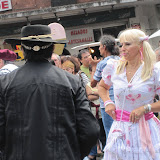
These are from last Sunday's adventure, except for the bookstore, which I visited last Saturday.
 |
| Matadores&therest |
Natalie's last week, and Alejandro's last day.
I will write about Natalie's last day especially since it involved using multiple forms of transportation to get around the march in which our very own Los Pibes participated.
 |
| LosPibes&Students |
Chau for now!
Monday, April 12, 2010
fin de semana
I had somewhat of a touristy weekend, but first I want to write about a small accomplishment. I mentioned that Natalie is leaving (only two more classes together!) and that I had suggested Johan, a La Boca resident, as my 'teaching assistant'. Last Thursday I called on him to help for the first time and the results were beautiful. He was actually studying the difference between 'this' and 'those' with Natalie, but one of our students, Lila, was still struggling with the 'to be' conjugation. I interrupted and asked him if he could help out and he really was magnificent. He asked her, very softly, what she didn't understand, and she really had a lot to say. She could not make the connection between what we were saying and what she saw printed on the page. And this after five weeks of starting each class with 'I am' 'you are'….You, as it appears on the page, would be pronounced in rioplatense as 'shoe'. And 'he' would be pronounced as 'ee'. She would follow us by the end of each class but because there was so much time between classes, the sounds would again become alien. Johan was able to discern this in about ninety seconds because she felt very comfortable telling him what he knew—that there is something very wrong with the way English is pronounced. He and I will have to communicate at some deeper level in order for me to ask for his help, but if we are both patient, I think that we will succeed. And we had a new student, Marco, a friend of Lila. They are both Peruvian. He came to us and said that he just wanted to know the basics, so we started him on Lesson One. But at some point we started to review colors with the group (everyone loves colors!) and I pointed to his shirt. 'And what color is this?' I asked. And he said 'It is green'. After he snuck in a few more complete sentences, I confronted him: 'you speak English, don't you?' and he looked mischievously at me and said 'a little'. I don't know if he'll come again, but if he does I have another tutor! And some other guy came upstairs looking for me, simply to say that he couldn't come to class at the moment but he wants to in the future. He works in a restaurant but is going to try to rearrange his schedule. When we keep repeating 'I am….'. 'He is…..' every week it is hard to feel as if anyone is learning anything. But Berta, the coordinator of the whole La Boca aspect of the program, said that two of our students who rarely come because they work in the 'soup kitchen' part of the soup kitchen are now saying 'hello' and 'goodbye'. To Berta, this is an accomplishment because Marta and Merta never felt confident enough to say those words out loud before. So the lesson here is this: in our orientation materials, there was a section about keeping our expectations low. I think this is important for everyone to remember when dropping into a world where people have lives that include things much more important than whatever it is you think you're contributing. If I look at our accomplishments in those terms then perhaps we have been successful. People try to come to class twice a week and it is only work that keeps them away. They think our classes are fun (or at least not boring). Maybe 'hello' and 'goodbye' and 'how are you?' will be the only things that they learn, but if that means that we've endowed them with the idea that it is possible TO learn, then we will have done something. And my goal is to leave people like Johan feeling confident that they can teach the people who come to the soup kitchen because then there will be continuity. I'll leave him with the lesson plans, and also the experience of having watched us closely, to see how we use songs and magazine pictures, and colors and maps. It makes so much more sense to have the locals do the teaching…the volunteers should be there to help THEM and provide native accents. Anyway, that is my goal, but I have to tell you that I am looking at a couple more opportunities because I don’t feel stretched enough.
This weekend I visited one of the art museums in Recoleta with Julieta. I wanted to focus on the argentinean art, and with my limited recollection of art history, my report is this: in some instances it appeared as if the subject matter and painting techniques of a given time were discordant with those north of the equator. For example, many of the early religious paintings were not smooth and detailed, but roughly textured and loose as if painted with something like a palette knife. I will have to wait for someone like Fredd to tell me if I'm utterly confused about who was painting in what style when, but I like the idea that equivalent but not equal paths were followed in different parts of the world. Now, to be fair, many of the artists of the early 19th century were born in Italy and died in Argentina but with only an indication of lifespan not immigration, it is hard to know if they took an idea of what constitutes art and how it should be done with them. Yet another thing I know enough about to have a half baked hypothesis, but lacking the knowledge to know why or why not.
The other thing I did this weekend is take a long bus ride with Natalie, almost off the guia map, to 'La Feria de Mataderos'. First, it was almost as if we were taking a mystery bus because we never came across a stop with the right bus number, either going or coming back. The ride was supposed to take 55 minutes—I ascertained that after following the guia, flipping back and forth from my starting point to destination, and streets named in the bus route (remember there is no indication where you are supposed to catch the bus in this famous guide). So I went online and put in the two sets of cross streets and received a series of totally absurd ways to reach my destination. I decided upon the one route that would only require one vehicle of any sort, even if we had to walk a few blocks. Anyway, a great deal of the ride to the feria was on cobblestone road and nearly intolerable. The way people drive is this: a yellow light actually appears below the red light when it is about to change to green so everyone jackrabbits out into the intersection as soon as that change is made. But….that doesn't mean the vehicles with the light changing from green to green and yellow and then simply red have stopped their race through the intersection. All of this results in perpetual jerky movements. And whatever the speed limit is, the buses seem to go over it to make up some arbitrary time. We went through some of the neighborhood where I'd been lost in the dark the weekend before, and of course they didn't look at all menacing and we went through a couple other neighborhoods we were not supposed to walk in alone. They looked fine to me. Large avenues seemed to set the border for a neighborhood. Where on one side of the avenue you might find walls so graffiti-ed that barely any virgin wall was left, on the other side you might see tables with umbrellas set up on the sidewalk in front of a café advertising wi-fi inside. Basically we traversed the southern part of the city from east to west. We kept watch on a couple who had hopped on the bus the stop after we did because they looked as out of place as us so we knew they were probably going to the feria as well. But so was half the bus, it turned out, since we all piled out at the edge of a green space—a parque.
As we walked toward the feria we passed by stalls with lots of plastic, mass produced, junk. I don't know how else to describe it. Much of it was pink. Intermixed were hippy stalls with macramé bracelets and more. I have to admit that I bought a wine colored, thin, macramé bracelet from a blond rasta kid for the equivalent of $2. He had some nice designs and they were evident even among the sea of pink plastic. The first sign that we had arrived at the actual feria was the smell of carne. That's one of the main things people come for—meat of about a dozen forms, cooked on huge grills. Natalie immediately had to have some sausage like thing and if you are ever reading this Natalie, please add the name since I had no reason to keep it in my head. So meat was big. And the vendors consisted of leather workers, metal workers, wool workers, mate bowls, and variants thereof, and then local-ish food such as cheese (it's all rather young and bland), wine, grappa (I had a taste of that and it was muy rico), herbs, honey, yerba mate (of course), olive oil and grapeseed oil, and sausage like things. Then there were the prepared food vendors—carne, of course, in various forms, empanadas, tamales, and then something that was wrapped like a tamale called a humita supposedly filled with sweet corn. I actually tried that and it tasted like very salty, somewhat corny, overcooked oatmeal. Then there were two sorts of entertainment spaces. In one there was a stage with musicians, revolving in and out. Most impressive was a band of about a dozen men dressed in black even to their hats, with multi-colored sashes playing many instruments, mostly guitars. In front of the stage were dancers—some professional tango dancers dressed traditionally, and others people just having a good time. In the other entertainment area was a gaucho display. Wearing traditional clothing, men on beautiful horses waited for the signal to go—very fast—toward a setup that looked like a goal post with something hanging down from it and the rider had to pull that something down AND beat the time of the other riders. I wish I could tell you more than that, but it is one of the things I captured on film and will post tomorrow or the next day.
Finally, there were about four or five VERY small ponies. They seemed to be less than a yard high. Any kid sitting on one would have to be under two years old. The ponies were decorated with pink or else I'm remembering the whole day that way. Because I think the llama (the other animal hanging around the feria) was also decorated in pink. We'll see when I put up the pictures.
On the street we saw many signs with 'nuevo chicago' written on them. It made me think that that might be the name of this little neighborhood. We did walk through a concrete courtyard to a community building where a dance was taking place. We peeked in—it was mostly older couples dancing the tango, with anachronistic disco balls overhead, and a string of blue neon lights defining the entryway. I stood as far in as I could go without paying, trying to take pictures, and then the simpatico senor waved me in. I stood, then, at the edge of the dance floor trying to catch the dancers, especially a man in a pale lime green suit and hat. He caught me attempting to photograph him and then he started hamming it up. When the dance finished he came up to us, told me I was muy linda, and asked Natalie to take our picture. That's all I can say about that.
And we visited one more building—the criollos museum (spanish for creole). Full disclosure: we did not actually want to visit the museum but I needed a bano. The one porta-pottie smelled rank from three yards away and our only other option was to go to a restaurant and buy something to eat or drink. So we went to this museum that cost us 2 pesos each (about 50 cents). We went to the bano, and there discovered something new: you had to pay 5 pesos for toilet paper! I saw the bathroom attendant but I thought she was there for the paper towels until we both had the same paperless experience in the stalls. Good thing I had lots of tissues in my pockets.
We walked round and round two or three times until we were exhausted, more from the sun than anything else. The bus ride back was on a smooth rode but so many people left at the same time that we were jammed in tight for most of the ride.
We ended our adventure by stopping off in my neighborhood at the weekly faria because Natalie wanted to buy some specific mate bowls to take home for presents. The vendors were packing up when we got there but the one she wanted had not gotten that far. As we were walking to her bus stop, we passed a trio of drag queens on very, very, very high patent leather platform shoes—I swear they were nine feet tall. AND, and I'm sure of this, they had pink hair and pink detailing in their dresses. I tried to get a picture but I only caught an edge. I don't know where they were headed but they seemed to be in a hurry.
Tomorrow I'll put up some pictures, but for now, I'll just say:
Chau!
This weekend I visited one of the art museums in Recoleta with Julieta. I wanted to focus on the argentinean art, and with my limited recollection of art history, my report is this: in some instances it appeared as if the subject matter and painting techniques of a given time were discordant with those north of the equator. For example, many of the early religious paintings were not smooth and detailed, but roughly textured and loose as if painted with something like a palette knife. I will have to wait for someone like Fredd to tell me if I'm utterly confused about who was painting in what style when, but I like the idea that equivalent but not equal paths were followed in different parts of the world. Now, to be fair, many of the artists of the early 19th century were born in Italy and died in Argentina but with only an indication of lifespan not immigration, it is hard to know if they took an idea of what constitutes art and how it should be done with them. Yet another thing I know enough about to have a half baked hypothesis, but lacking the knowledge to know why or why not.
The other thing I did this weekend is take a long bus ride with Natalie, almost off the guia map, to 'La Feria de Mataderos'. First, it was almost as if we were taking a mystery bus because we never came across a stop with the right bus number, either going or coming back. The ride was supposed to take 55 minutes—I ascertained that after following the guia, flipping back and forth from my starting point to destination, and streets named in the bus route (remember there is no indication where you are supposed to catch the bus in this famous guide). So I went online and put in the two sets of cross streets and received a series of totally absurd ways to reach my destination. I decided upon the one route that would only require one vehicle of any sort, even if we had to walk a few blocks. Anyway, a great deal of the ride to the feria was on cobblestone road and nearly intolerable. The way people drive is this: a yellow light actually appears below the red light when it is about to change to green so everyone jackrabbits out into the intersection as soon as that change is made. But….that doesn't mean the vehicles with the light changing from green to green and yellow and then simply red have stopped their race through the intersection. All of this results in perpetual jerky movements. And whatever the speed limit is, the buses seem to go over it to make up some arbitrary time. We went through some of the neighborhood where I'd been lost in the dark the weekend before, and of course they didn't look at all menacing and we went through a couple other neighborhoods we were not supposed to walk in alone. They looked fine to me. Large avenues seemed to set the border for a neighborhood. Where on one side of the avenue you might find walls so graffiti-ed that barely any virgin wall was left, on the other side you might see tables with umbrellas set up on the sidewalk in front of a café advertising wi-fi inside. Basically we traversed the southern part of the city from east to west. We kept watch on a couple who had hopped on the bus the stop after we did because they looked as out of place as us so we knew they were probably going to the feria as well. But so was half the bus, it turned out, since we all piled out at the edge of a green space—a parque.
As we walked toward the feria we passed by stalls with lots of plastic, mass produced, junk. I don't know how else to describe it. Much of it was pink. Intermixed were hippy stalls with macramé bracelets and more. I have to admit that I bought a wine colored, thin, macramé bracelet from a blond rasta kid for the equivalent of $2. He had some nice designs and they were evident even among the sea of pink plastic. The first sign that we had arrived at the actual feria was the smell of carne. That's one of the main things people come for—meat of about a dozen forms, cooked on huge grills. Natalie immediately had to have some sausage like thing and if you are ever reading this Natalie, please add the name since I had no reason to keep it in my head. So meat was big. And the vendors consisted of leather workers, metal workers, wool workers, mate bowls, and variants thereof, and then local-ish food such as cheese (it's all rather young and bland), wine, grappa (I had a taste of that and it was muy rico), herbs, honey, yerba mate (of course), olive oil and grapeseed oil, and sausage like things. Then there were the prepared food vendors—carne, of course, in various forms, empanadas, tamales, and then something that was wrapped like a tamale called a humita supposedly filled with sweet corn. I actually tried that and it tasted like very salty, somewhat corny, overcooked oatmeal. Then there were two sorts of entertainment spaces. In one there was a stage with musicians, revolving in and out. Most impressive was a band of about a dozen men dressed in black even to their hats, with multi-colored sashes playing many instruments, mostly guitars. In front of the stage were dancers—some professional tango dancers dressed traditionally, and others people just having a good time. In the other entertainment area was a gaucho display. Wearing traditional clothing, men on beautiful horses waited for the signal to go—very fast—toward a setup that looked like a goal post with something hanging down from it and the rider had to pull that something down AND beat the time of the other riders. I wish I could tell you more than that, but it is one of the things I captured on film and will post tomorrow or the next day.
Finally, there were about four or five VERY small ponies. They seemed to be less than a yard high. Any kid sitting on one would have to be under two years old. The ponies were decorated with pink or else I'm remembering the whole day that way. Because I think the llama (the other animal hanging around the feria) was also decorated in pink. We'll see when I put up the pictures.
On the street we saw many signs with 'nuevo chicago' written on them. It made me think that that might be the name of this little neighborhood. We did walk through a concrete courtyard to a community building where a dance was taking place. We peeked in—it was mostly older couples dancing the tango, with anachronistic disco balls overhead, and a string of blue neon lights defining the entryway. I stood as far in as I could go without paying, trying to take pictures, and then the simpatico senor waved me in. I stood, then, at the edge of the dance floor trying to catch the dancers, especially a man in a pale lime green suit and hat. He caught me attempting to photograph him and then he started hamming it up. When the dance finished he came up to us, told me I was muy linda, and asked Natalie to take our picture. That's all I can say about that.
And we visited one more building—the criollos museum (spanish for creole). Full disclosure: we did not actually want to visit the museum but I needed a bano. The one porta-pottie smelled rank from three yards away and our only other option was to go to a restaurant and buy something to eat or drink. So we went to this museum that cost us 2 pesos each (about 50 cents). We went to the bano, and there discovered something new: you had to pay 5 pesos for toilet paper! I saw the bathroom attendant but I thought she was there for the paper towels until we both had the same paperless experience in the stalls. Good thing I had lots of tissues in my pockets.
We walked round and round two or three times until we were exhausted, more from the sun than anything else. The bus ride back was on a smooth rode but so many people left at the same time that we were jammed in tight for most of the ride.
We ended our adventure by stopping off in my neighborhood at the weekly faria because Natalie wanted to buy some specific mate bowls to take home for presents. The vendors were packing up when we got there but the one she wanted had not gotten that far. As we were walking to her bus stop, we passed a trio of drag queens on very, very, very high patent leather platform shoes—I swear they were nine feet tall. AND, and I'm sure of this, they had pink hair and pink detailing in their dresses. I tried to get a picture but I only caught an edge. I don't know where they were headed but they seemed to be in a hurry.
Tomorrow I'll put up some pictures, but for now, I'll just say:
Chau!
Sunday, April 4, 2010
Off track
Vignette One: Last Saturday I asked Alejandro where I should go for the day and like a good city promoter, he pointed out museums and green spaces on my fraying map. But those places exist in most big cities and I wanted more—something uniquely Buenos Aires. He said he knew a place but it would be irresponsible of him to send me there alone but if I came back at 4 he'd take me.
We started at Independencia and made a 'combinacion' at Plaza de Mayo with the oldest subte line, A. The station had original, early 20th century ticket booths and tiling. The car interiors were wooden and lit by ornate light fixtures. At your stop you had to pull the doors open (like many of the elevators around here). We got off the subte at Carabobo and climbed the stairs to a street that runs from one side of the city to the next, but we were about 200 blocks from the part I knew. In fact, we were just inside the margins of the edge of the transportation map, but we weren't at our destination yet. We walked and walked and walked, and I saw things I had not seen before. No fancy clothes, the shops full of inexpensive shapeless clothes and restaurants of takeout food but not the type that makes the tourists feel like they are still home. The street was alive with shoppers and cars driving too fast for pedestrians to share. We took a short detour into the neighborhood off the main drag so that I could see where the people lived. The housing was simple, square and boxy, probably from the fifties. Trees enlivened the otherwise gray low concrete habitats. Quiet and plain. We went back to Avienda Rivadaria to find a bus to take us to where were were actually headed. We walked for many blocks looking for colectivo 86 until Ale stopped and asked a heavily pierced young man standing in the doorway of a news shop where we could catch an 86. Apparently the 86 was now named colectivo 8 for which we instantly found a stop. Stops have a separate sign for each bus that lists the landmark streets it will take on its way to the end. The famous guia that is supposed to tell you which bus you need to take to get from one quadrant on one page to another quadrant on another page lists those streets…but nowhere can you find where a bus will actually stop to get you. Sometimes you can walk for four city blocks along the route you think your bus will be taking before you find a stop with the metal sign with the appropriate number. Anyway, our stop said 8, and then below it X 86. So it was the same route with a number change but there you have it. In a rare exception to the rule, this bus actually allowed you to use the magnetic subte card to pay the fare. Every bus in the colectivo group has a different system of paying your fare and just today someone had to show me how to pay on the 24. What they all have in common is that you have to tell the conductor what you are going to pay. Someone told me just to name the middle number. That would be 'uno viente' as opposed to 'uno diez' or 'uno viente cinco' (28-32 cents by the current exchange rate in case you're interested). And then when we got off the bus we were in a different world.
There were crowds of people, much shorter and rounder than the tall, reed thin argentineans, with pronounced facial bones and darker skin. We were in the peruvian and bolivian outskirts of town. We became part of a movement along the sidewalk. We walked past walking restaurants—stalls that opened up to the sidewalk with a few stools to sit on while you got your walk away meal (something meaty). Slim vegetable stands with baskets of vegetables spilling out onto the sidewalk. Vendors setting up blankets 0n the curb, crowding the people in even closer. People were jostling against each other but in a non-threatening way. I could smell garlic and onions, a different cuisine in the air. I just focused on not tripping over the uneven sidewalks and not losing sight of Ale but couldn't help drinking in the colors—there were rainbow shades all around. We stopped so Ale could show me a shop that sold incense…I couldn't figure out what he'd meant by sticks that burn. We had a destination in this neighborhood—the peruvian former girlfriend of one of Ale's brothers had a restaurant called Mi Esperanza (My Hope). We sat out in the back (with the crowded sidewalks there would be nowhere to place a table out front). Ale had a beer—they come in liters—and I had pisco. Tania, his friend, wanted me to wait until her mother arrived to make me a proper pisco sour, but that wasn't what I wanted anyway…so I got the good stuff straight up and it was wonderful, straight from Peru. We shared a dish of sliced cold potatoes with a spicy (finally) sauce over it and sliced hard boiled eggs on the side. And then we had a rice dish made special for the vegetariana and it too was muy rico! Totally different kind of cooking. And then Tania insisted that I take a desert home with me—a type of rice pudding with some kind of dulce but not a cloying type.
Ale told me that many argentineans (they don’t capitalize anything but the name of the country so I'm not trying to be cute), don't venture to this part of town. The belief is that the bolivians and peruvians are dirty, among other things, but living in a neighborhood where dodging dogpiles is part of the walking exercise routine, I couldn’t see it. But there is always someone who has to live on the outskirts, I suppose, and these immigrants are one group of such people. What I saw was color and spice and crowded streets and squares and stores. Lots of life.
From there we went to a tren, the Sarmiento. We had to walk across an overpass and I realized that we were going to be taking a totally different type of transportation—We saw police separating two battering men bleeding in gushes. On the train, most of the people were standing. A man came through the car with a box selling oversized cans of beer. I commented that it wouldn't be legal in the U.S. to which Ale replied it isn't legal here either. And then for the first time someone derided me for being American. Many people can't tell one English speaker from another, but this guy, drunk, had me down. We both ignored him and let him go on but it reminded me that there were parts of the city where I needed to keep my mouth shut or speak my simple spanish. In fact, the reason Johan waits with us at the bus stop in La Boca is that the last two volunteers they had were on the busy street (the stop is next to a pizza restaurant), speaking english and they were mugged during daylight hours. It's very easy to forget that we're targets to some people.
When we got off the train Ale pointed out a car devoid of everything except, it appeared, some padding on the walls. He said that if you wanted to bring your bicycle with you you'd put it in there, but it looked more like a place that many people would crowd into and sleep. Anyway, we walked across a square and into another subte station and after making one 'combinacion' ended up back at our own Independencia stop just three blocks away from the apart hotel.
Vignette two: Two of the the 'Academia' owners are married (Frederico who is german and Virginia who is uruguyan) and they live in a part of Buenos Aires called Constitucion. I was advised not to live there, but I figured how bad could it be if these two had a home there. They were having an annual party on the Thursday of Semana Santa or Santa Semana, meaning just a few days ago. Friday of Santa Semana is a National Holiday, and for some people Thursday is as well. I thought I could walk to their house because the cross street was only one block down from me (and 20 blocks out). I asked the two Carlos' if it was safe and after a long discussion and look at the map they said yes. But at the Academia Cecilia told me absolutely not, that I would be crossing unsafe areas and to take a cab which would cost me all of 12 pesos ($3.09). But when the time came to go I asked Ale and after he said I could take the subte without even a 'combinacion' and then just walk two blocks on a main street and two blocks down the cross street. And Frederico had put up a map of which subway stop to get off and his directions mirrored Ale's so I figured why not. I had taken care to take my token wine out of the wine bag and put it into a farmacia bag instead. Everything went fine. But when I got to the top of the stairs I had no clue which way was west. I walked a block and realized I had gone the wrong way because I reached a major street and I remembered the picture of the map. So I turned around and felt oriented. The street, while having a fair amount of traffic, was dark. Only a few business were open---it was 10 p.m. at this point. Oh, this is actually a point worth making. I'd been advised that an invitation for a particular time meant don't arrive before then, not that's when you should be there. Apparently it is almost rude to show up at the time on an invitation. Natalie, for example, had been invited to a Seder along with another college student from the U.S. and they actually stood outside the house for an HOUR before the guy came down, shirtless, to let them in. So that is why I thought 10 was actually a little early for me to be in the neighborhood since the invitation was for 9:30. Anyway, I was on pretty high alert because of the dark. The corner I wanted had an ice cream / pizza shop so it was well lit and actually had the street name in plain view. I started to walk down the street, which was totally devoid of street lights, feeling a little vulnerable but certain that I'd get to the street in the two blocks I'd seen on the map. And I could see a major street about five blocks down. I passed one lit building, and another with an old woman in a small flower print house dress and slippers sitting on the stoop, eyeing me suspiciously. And then I passed an open concrete area and when I was right upon it I saw that it held a half dozen cardboard and sheet structures—homes with little rooms by the look of it. I saw a little kid come out of one, wearing shorts and nothing more, and standing in front of the next structure, calling for someone to come out. I decided I shouldn't be walking in their front yard so I crossed over. When the next street was not the one I expected and in fact all I could see was dark warehouses, and since I didn't actually have a map with me I was contemplating calling the apart hotel and having whoever was there tell me where I was supposed to be. And then I saw a policeman checking doors so I went up to him and gave him my destination and he told me that I needed to go and cross over the major street—that basically I'd gone the wrong way…deep into where I was not supposed to be. But the exciting thing was that I was able to ask him in Spanish and I understood his directions and that would not have happened two months ago. Of course in Montevideo I wouldn’t' have been in a neighborhood like this either, but hey. So I turned around, walked past the cardboard neighborhood again, and then caught up with a gang of soccer kids coming out of the ice cream / pizza shop. One of them told me to watch his friend…who ran out into the traffic, laughing and whooping it up as he dodged cars. He would run to the middle of the street and run back and then do it again and everyone was entertained but me. Anyway, I finally made it, and Frederico, who had met me in Montevideo and knew that I was directionally challenged asked me how many times I'd gotten lost. How's that for a greeting?
And then the third vignette: I don't go to church except for wedding, baptisms, and funerals. But, it turns out that the bishop for all of the south american greek orthodox churches is here in Buenos Aires and he knew my father and knows my mother and it just seemed like a cool thing to do to go to a service for Good Friday that was going to be at least partially in Spanish. Natalie, who is a real peach, said she'd go with me and so I met up with her in Palermo where she lives because this church was supposed to be in Palermo about fourteen blocks away. Palermo is huge—there is Viejo Palermo, Palermo Hollywood, Palermo Soho, and I think just plain Palermo as well. It has lots of trendy restaurants and a huge café sidewalk culture. Hopping all the time. It is bordered by the zoo and botanical gardens on one side and many barrios on the other. We headed off, not knowing what to expect. About halfway through the streets became deserted. Car dealerships—not like ours with lots but storefronts—businesses that weren't open at night. We had to stop a few times to look at the guia because it just didn't seem as if we were headed in the right direction. But we pushed on, overshot the street, came back and then were totally confused because there was no building on the street with a dome as Greek churches are wont to have. Instead what we found was a concrete wall with an opening to a courtyard, and then about a basketball court sized space and then a church with a façade like the white washed Santorini style. I met one old man who immediately spoke to me in Greek and he invited us inside. I'm going to make this a condensed version of a very long night. Most people never came into the church but stayed out in the courtyard talking. Those that did were wearing just about anything you could imagine. There were six guys sitting up on the altar space who actually wore suits and ties. There was a woman with impossible heels and a spandex sequin tube top. There was a guy with a wooly beard, sandals, and cargo shorts. There was a small group of women who came in together wearing leather jackets and even pants (although it was in the 60s). Jeans so tight I know why the man or woman wearing them didn't sit down. A woman with hair the color of a cherry red Corvette. The service was in Greek and Spanish, but the Spanish didn't sound Spanish and the Greek didn't sound Greek. We only knew the difference when we'd recognize a pronoun. The interior of the church was not atypical except for a plethora of large very silver stars covering the ceiling among the saints and greek inscriptions.
The highlight of this service is when the funeral bier, covered with white flowers, is carried out by four men and walked around the church or the block followed by a procession of clergy and related robed men and then all the congregation, holding candles that they light one by one from each other. Dirges are sung. In this church girls with baskets of rose petals led the way for the bishop and his group. Amazing thing number one was that the seventy or so odd people in the church had turned into several hundred in the street. Amazing thing number two was that we kept going and going, not just around the block but down two or three and then over to a four lane very busy street where traffic was stopped until we all turned the corner. The indignant drivers of cars, buses, and taxis, drowned out the dirging as they sped by us. And we marched on, some people texting while they walked because we were going so slowly. The one kid in the group carrying the bier wobbled a bit. He was wearing a red tee shirt with some kind of slogan on it and at some point he was replaced because the red shirt disappeared. And then suddenly we all stopped. Just stopped. We were in front of another church, also not Byzantine but it had an icon embedded in its façade. From the open door came another bier. This one was green, red, and white, and not as lush. Some more bishops came out—their hats were slightly different than ours, but you could tell they were related. We started walking again and people from the new church came out with their candles and mingled with our group. Maybe a couple hundred more? Then we had to cross another main street and a police car stopped traffic so we could get safely across. But this time there was no patience—honking began almost immediately once again drowning out the dirges even though the number of singers had increased. We stopped again at the church of our origin. All the bishops stood together and said things no one could hear. Then they started chanting Kyrie Eleison, and the words spread through the group until it became loud enough to hear, for a long time. We tried to sneak away. We were standing next to a group of teenage girls who were having fun burning the paper cardboard encircling the candle to catch the drips, so I blew my candle out for safety reasons. I took a few steps but a very stern man admonished me and lit my candle again. Finally, the red, green, and white group started to move, our crowd started to thin and we were out of there.
I spent some time today figuring out the red, green, and white group. I know where the Russian Orthodox church is since it's down the street from me, but all I knew about this other church was the name (San Jorge) and approximate neighborhood (which turned out not to be Palermo but Villa Crispi). I found a list of churches in Buenos Aires, divided into Catholic and Not Catholic and from there to San Jorge's website and noticed that they taught Arabic. After a bit more digging and a history lesson from Fredd, we figured out that they are Syric (yup) Orthodox. Which confirms Natalie's hypothesis that we were in an Arabic neighborhood as we process-ed by taking note of a couple of arabic restaurants, grocery stores and rug shops along the way.
And there you have it: ten days of adventures away from the main streets of Buenos Aires. When I figure out how to put up a map I'll show you where all these places are in relation to each other.
Oh! And I graduated to Nevel III in Spanish. Of course that's out of VIII and only an advanced beginner, but I give me props for only having started January 22nd and talking way too much English every day.
We started at Independencia and made a 'combinacion' at Plaza de Mayo with the oldest subte line, A. The station had original, early 20th century ticket booths and tiling. The car interiors were wooden and lit by ornate light fixtures. At your stop you had to pull the doors open (like many of the elevators around here). We got off the subte at Carabobo and climbed the stairs to a street that runs from one side of the city to the next, but we were about 200 blocks from the part I knew. In fact, we were just inside the margins of the edge of the transportation map, but we weren't at our destination yet. We walked and walked and walked, and I saw things I had not seen before. No fancy clothes, the shops full of inexpensive shapeless clothes and restaurants of takeout food but not the type that makes the tourists feel like they are still home. The street was alive with shoppers and cars driving too fast for pedestrians to share. We took a short detour into the neighborhood off the main drag so that I could see where the people lived. The housing was simple, square and boxy, probably from the fifties. Trees enlivened the otherwise gray low concrete habitats. Quiet and plain. We went back to Avienda Rivadaria to find a bus to take us to where were were actually headed. We walked for many blocks looking for colectivo 86 until Ale stopped and asked a heavily pierced young man standing in the doorway of a news shop where we could catch an 86. Apparently the 86 was now named colectivo 8 for which we instantly found a stop. Stops have a separate sign for each bus that lists the landmark streets it will take on its way to the end. The famous guia that is supposed to tell you which bus you need to take to get from one quadrant on one page to another quadrant on another page lists those streets…but nowhere can you find where a bus will actually stop to get you. Sometimes you can walk for four city blocks along the route you think your bus will be taking before you find a stop with the metal sign with the appropriate number. Anyway, our stop said 8, and then below it X 86. So it was the same route with a number change but there you have it. In a rare exception to the rule, this bus actually allowed you to use the magnetic subte card to pay the fare. Every bus in the colectivo group has a different system of paying your fare and just today someone had to show me how to pay on the 24. What they all have in common is that you have to tell the conductor what you are going to pay. Someone told me just to name the middle number. That would be 'uno viente' as opposed to 'uno diez' or 'uno viente cinco' (28-32 cents by the current exchange rate in case you're interested). And then when we got off the bus we were in a different world.
There were crowds of people, much shorter and rounder than the tall, reed thin argentineans, with pronounced facial bones and darker skin. We were in the peruvian and bolivian outskirts of town. We became part of a movement along the sidewalk. We walked past walking restaurants—stalls that opened up to the sidewalk with a few stools to sit on while you got your walk away meal (something meaty). Slim vegetable stands with baskets of vegetables spilling out onto the sidewalk. Vendors setting up blankets 0n the curb, crowding the people in even closer. People were jostling against each other but in a non-threatening way. I could smell garlic and onions, a different cuisine in the air. I just focused on not tripping over the uneven sidewalks and not losing sight of Ale but couldn't help drinking in the colors—there were rainbow shades all around. We stopped so Ale could show me a shop that sold incense…I couldn't figure out what he'd meant by sticks that burn. We had a destination in this neighborhood—the peruvian former girlfriend of one of Ale's brothers had a restaurant called Mi Esperanza (My Hope). We sat out in the back (with the crowded sidewalks there would be nowhere to place a table out front). Ale had a beer—they come in liters—and I had pisco. Tania, his friend, wanted me to wait until her mother arrived to make me a proper pisco sour, but that wasn't what I wanted anyway…so I got the good stuff straight up and it was wonderful, straight from Peru. We shared a dish of sliced cold potatoes with a spicy (finally) sauce over it and sliced hard boiled eggs on the side. And then we had a rice dish made special for the vegetariana and it too was muy rico! Totally different kind of cooking. And then Tania insisted that I take a desert home with me—a type of rice pudding with some kind of dulce but not a cloying type.
Ale told me that many argentineans (they don’t capitalize anything but the name of the country so I'm not trying to be cute), don't venture to this part of town. The belief is that the bolivians and peruvians are dirty, among other things, but living in a neighborhood where dodging dogpiles is part of the walking exercise routine, I couldn’t see it. But there is always someone who has to live on the outskirts, I suppose, and these immigrants are one group of such people. What I saw was color and spice and crowded streets and squares and stores. Lots of life.
From there we went to a tren, the Sarmiento. We had to walk across an overpass and I realized that we were going to be taking a totally different type of transportation—We saw police separating two battering men bleeding in gushes. On the train, most of the people were standing. A man came through the car with a box selling oversized cans of beer. I commented that it wouldn't be legal in the U.S. to which Ale replied it isn't legal here either. And then for the first time someone derided me for being American. Many people can't tell one English speaker from another, but this guy, drunk, had me down. We both ignored him and let him go on but it reminded me that there were parts of the city where I needed to keep my mouth shut or speak my simple spanish. In fact, the reason Johan waits with us at the bus stop in La Boca is that the last two volunteers they had were on the busy street (the stop is next to a pizza restaurant), speaking english and they were mugged during daylight hours. It's very easy to forget that we're targets to some people.
When we got off the train Ale pointed out a car devoid of everything except, it appeared, some padding on the walls. He said that if you wanted to bring your bicycle with you you'd put it in there, but it looked more like a place that many people would crowd into and sleep. Anyway, we walked across a square and into another subte station and after making one 'combinacion' ended up back at our own Independencia stop just three blocks away from the apart hotel.
Vignette two: Two of the the 'Academia' owners are married (Frederico who is german and Virginia who is uruguyan) and they live in a part of Buenos Aires called Constitucion. I was advised not to live there, but I figured how bad could it be if these two had a home there. They were having an annual party on the Thursday of Semana Santa or Santa Semana, meaning just a few days ago. Friday of Santa Semana is a National Holiday, and for some people Thursday is as well. I thought I could walk to their house because the cross street was only one block down from me (and 20 blocks out). I asked the two Carlos' if it was safe and after a long discussion and look at the map they said yes. But at the Academia Cecilia told me absolutely not, that I would be crossing unsafe areas and to take a cab which would cost me all of 12 pesos ($3.09). But when the time came to go I asked Ale and after he said I could take the subte without even a 'combinacion' and then just walk two blocks on a main street and two blocks down the cross street. And Frederico had put up a map of which subway stop to get off and his directions mirrored Ale's so I figured why not. I had taken care to take my token wine out of the wine bag and put it into a farmacia bag instead. Everything went fine. But when I got to the top of the stairs I had no clue which way was west. I walked a block and realized I had gone the wrong way because I reached a major street and I remembered the picture of the map. So I turned around and felt oriented. The street, while having a fair amount of traffic, was dark. Only a few business were open---it was 10 p.m. at this point. Oh, this is actually a point worth making. I'd been advised that an invitation for a particular time meant don't arrive before then, not that's when you should be there. Apparently it is almost rude to show up at the time on an invitation. Natalie, for example, had been invited to a Seder along with another college student from the U.S. and they actually stood outside the house for an HOUR before the guy came down, shirtless, to let them in. So that is why I thought 10 was actually a little early for me to be in the neighborhood since the invitation was for 9:30. Anyway, I was on pretty high alert because of the dark. The corner I wanted had an ice cream / pizza shop so it was well lit and actually had the street name in plain view. I started to walk down the street, which was totally devoid of street lights, feeling a little vulnerable but certain that I'd get to the street in the two blocks I'd seen on the map. And I could see a major street about five blocks down. I passed one lit building, and another with an old woman in a small flower print house dress and slippers sitting on the stoop, eyeing me suspiciously. And then I passed an open concrete area and when I was right upon it I saw that it held a half dozen cardboard and sheet structures—homes with little rooms by the look of it. I saw a little kid come out of one, wearing shorts and nothing more, and standing in front of the next structure, calling for someone to come out. I decided I shouldn't be walking in their front yard so I crossed over. When the next street was not the one I expected and in fact all I could see was dark warehouses, and since I didn't actually have a map with me I was contemplating calling the apart hotel and having whoever was there tell me where I was supposed to be. And then I saw a policeman checking doors so I went up to him and gave him my destination and he told me that I needed to go and cross over the major street—that basically I'd gone the wrong way…deep into where I was not supposed to be. But the exciting thing was that I was able to ask him in Spanish and I understood his directions and that would not have happened two months ago. Of course in Montevideo I wouldn’t' have been in a neighborhood like this either, but hey. So I turned around, walked past the cardboard neighborhood again, and then caught up with a gang of soccer kids coming out of the ice cream / pizza shop. One of them told me to watch his friend…who ran out into the traffic, laughing and whooping it up as he dodged cars. He would run to the middle of the street and run back and then do it again and everyone was entertained but me. Anyway, I finally made it, and Frederico, who had met me in Montevideo and knew that I was directionally challenged asked me how many times I'd gotten lost. How's that for a greeting?
And then the third vignette: I don't go to church except for wedding, baptisms, and funerals. But, it turns out that the bishop for all of the south american greek orthodox churches is here in Buenos Aires and he knew my father and knows my mother and it just seemed like a cool thing to do to go to a service for Good Friday that was going to be at least partially in Spanish. Natalie, who is a real peach, said she'd go with me and so I met up with her in Palermo where she lives because this church was supposed to be in Palermo about fourteen blocks away. Palermo is huge—there is Viejo Palermo, Palermo Hollywood, Palermo Soho, and I think just plain Palermo as well. It has lots of trendy restaurants and a huge café sidewalk culture. Hopping all the time. It is bordered by the zoo and botanical gardens on one side and many barrios on the other. We headed off, not knowing what to expect. About halfway through the streets became deserted. Car dealerships—not like ours with lots but storefronts—businesses that weren't open at night. We had to stop a few times to look at the guia because it just didn't seem as if we were headed in the right direction. But we pushed on, overshot the street, came back and then were totally confused because there was no building on the street with a dome as Greek churches are wont to have. Instead what we found was a concrete wall with an opening to a courtyard, and then about a basketball court sized space and then a church with a façade like the white washed Santorini style. I met one old man who immediately spoke to me in Greek and he invited us inside. I'm going to make this a condensed version of a very long night. Most people never came into the church but stayed out in the courtyard talking. Those that did were wearing just about anything you could imagine. There were six guys sitting up on the altar space who actually wore suits and ties. There was a woman with impossible heels and a spandex sequin tube top. There was a guy with a wooly beard, sandals, and cargo shorts. There was a small group of women who came in together wearing leather jackets and even pants (although it was in the 60s). Jeans so tight I know why the man or woman wearing them didn't sit down. A woman with hair the color of a cherry red Corvette. The service was in Greek and Spanish, but the Spanish didn't sound Spanish and the Greek didn't sound Greek. We only knew the difference when we'd recognize a pronoun. The interior of the church was not atypical except for a plethora of large very silver stars covering the ceiling among the saints and greek inscriptions.
The highlight of this service is when the funeral bier, covered with white flowers, is carried out by four men and walked around the church or the block followed by a procession of clergy and related robed men and then all the congregation, holding candles that they light one by one from each other. Dirges are sung. In this church girls with baskets of rose petals led the way for the bishop and his group. Amazing thing number one was that the seventy or so odd people in the church had turned into several hundred in the street. Amazing thing number two was that we kept going and going, not just around the block but down two or three and then over to a four lane very busy street where traffic was stopped until we all turned the corner. The indignant drivers of cars, buses, and taxis, drowned out the dirging as they sped by us. And we marched on, some people texting while they walked because we were going so slowly. The one kid in the group carrying the bier wobbled a bit. He was wearing a red tee shirt with some kind of slogan on it and at some point he was replaced because the red shirt disappeared. And then suddenly we all stopped. Just stopped. We were in front of another church, also not Byzantine but it had an icon embedded in its façade. From the open door came another bier. This one was green, red, and white, and not as lush. Some more bishops came out—their hats were slightly different than ours, but you could tell they were related. We started walking again and people from the new church came out with their candles and mingled with our group. Maybe a couple hundred more? Then we had to cross another main street and a police car stopped traffic so we could get safely across. But this time there was no patience—honking began almost immediately once again drowning out the dirges even though the number of singers had increased. We stopped again at the church of our origin. All the bishops stood together and said things no one could hear. Then they started chanting Kyrie Eleison, and the words spread through the group until it became loud enough to hear, for a long time. We tried to sneak away. We were standing next to a group of teenage girls who were having fun burning the paper cardboard encircling the candle to catch the drips, so I blew my candle out for safety reasons. I took a few steps but a very stern man admonished me and lit my candle again. Finally, the red, green, and white group started to move, our crowd started to thin and we were out of there.
I spent some time today figuring out the red, green, and white group. I know where the Russian Orthodox church is since it's down the street from me, but all I knew about this other church was the name (San Jorge) and approximate neighborhood (which turned out not to be Palermo but Villa Crispi). I found a list of churches in Buenos Aires, divided into Catholic and Not Catholic and from there to San Jorge's website and noticed that they taught Arabic. After a bit more digging and a history lesson from Fredd, we figured out that they are Syric (yup) Orthodox. Which confirms Natalie's hypothesis that we were in an Arabic neighborhood as we process-ed by taking note of a couple of arabic restaurants, grocery stores and rug shops along the way.
And there you have it: ten days of adventures away from the main streets of Buenos Aires. When I figure out how to put up a map I'll show you where all these places are in relation to each other.
Oh! And I graduated to Nevel III in Spanish. Of course that's out of VIII and only an advanced beginner, but I give me props for only having started January 22nd and talking way too much English every day.
Subscribe to:
Posts (Atom)
